
How to Apply Sunscreen on Face: Amount and Steps
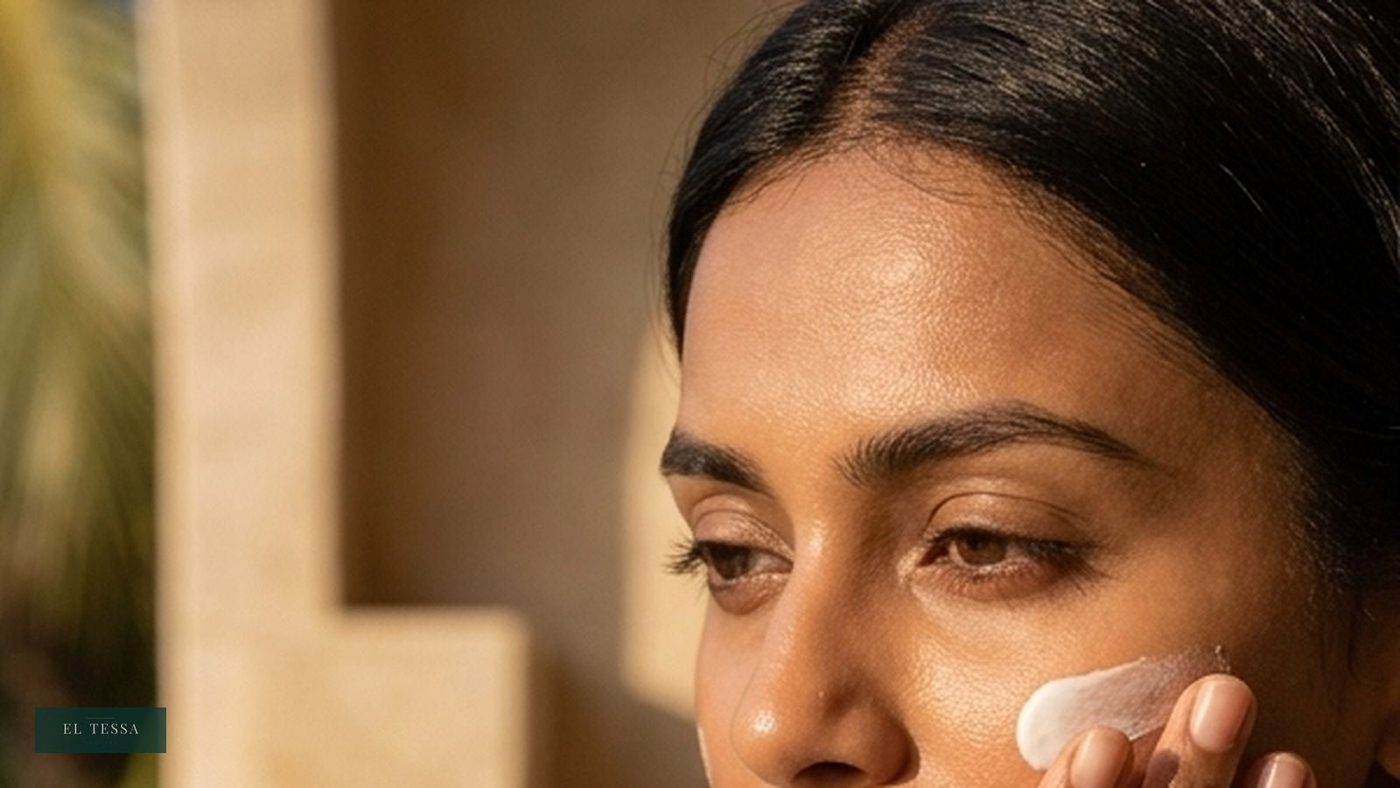
To apply sunscreen on your face, use about one teaspoon, which is the length of your index and middle fingers. Put it on as the last step of your morning routine, spread it evenly over the face and neck, and reapply about every two hours when you are outside.
How Much Sunscreen Should You Use on Your Face?
The American Academy of Dermatology (AAD) says to use at least 1 teaspoon of sunscreen on the face. It describes this as about the amount needed to cover the length of your index and middle fingers.
Here is an easy way to measure it without a spoon:
1. Squeeze a line of sunscreen along your index finger, from the base to the tip.
2. Squeeze a second line along your middle finger.
3. That is one face's worth, including the neck.
Many people use less because a thick layer feels heavy. If your sunscreen feels too heavy at this amount, the fix is a lighter formula, not a thinner layer. Our guide to the best sunscreen for oily, acne-prone skin explains what to look for.
What Is the Right Order: Before or After Moisturizer?
Sunscreen goes last in your morning routine, after your moisturizer. The usual order is:
1. Face wash
2. Serum, if you use one (such as vitamin C)
3. Moisturizer
4. Sunscreen
The reason is simple. Sunscreen needs to sit on top of the skin as an even layer. If you rub a moisturizer over it, you can move or thin that layer. Our skincare routine order guide shows where every product belongs.
How Do You Spread It Evenly?
Even coverage matters more than a perfect finish. Try the dot method:
1. Place small dots on the forehead, nose, both cheeks, chin and neck.
2. Blend with clean fingertips in gentle, smooth strokes until no white streaks remain.
3. Go back over the places people miss: the sides of the nose, the hairline, the jawline, the ears and the front of the neck.
4. Wait a minute before makeup or before you go outside.
Look in a mirror in daylight. A patchy face means patchy protection.
Do You Need Sunscreen in Winter and on Cloudy Days?
Yes. The AAD notes that the sun gives off harmful UV rays all year, and that up to 80% of the sun's UV rays can pass through clouds. A grey or smoggy day does not switch UV off.
Winter in Pakistan has habits that make people skip sunscreen. Mornings feel cool, the sun does not feel hot, and many of us sit near windows at home or in the office. The product page of our SPF 60+ Sunblock makes the same point: sun through a window in December counts too. We have not measured UV levels ourselves, so this guide relies on the AAD's guidance, not on our own data.
In winter your skin may feel drier. Put on your moisturizer first and let it settle, then add sunscreen. Our winter skincare routine for dry skin covers the full routine.
How Often Should You Reapply Sunscreen?
The AAD says to reapply approximately every two hours when you are outdoors, and after swimming or sweating. In practice:
- Mostly indoors: the morning layer is usually your main protection. Reapply if you go out for longer or sit by a sunny window for hours.
- Outside in direct sun: reapply about every two hours. In Pakistani summer, sweat and wiping your face can shorten that time.
- After washing your face or rubbing it with a towel: reapply, because the layer is gone.
Reapplying over makeup is the hard part. Dab small amounts onto bare areas with your fingertips instead of rubbing, or use a sunscreen that sits well under makeup.
Why Does Sunscreen Matter If You Use Actives?
Vitamin C, glycolic acid, salicylic acid and retinol are popular, and some of them can make skin more sensitive to the sun. Our own SPF 60+ Sunblock page says the same: if you use these actives, sunscreen is a must. Without it, you may be working against your own routine.
To see how serums and acids fit together, read our guides on layering face serums and using a glycolic acid toner.
What Are the Most Common Mistakes?
- Using too little. A small pea-sized dab will not reach the AAD amount for a face.
- Skipping the neck and ears. These areas are in the sun too.
- Applying only when it feels hot. UV does not depend on how hot the day feels.
- Never reapplying. One morning layer does not last all day outdoors.
- Choosing a formula you dislike. If it feels greasy or leaves a white film, you will stop wearing it. A sunscreen only helps if you wear it every day.
Which EL TESSA Product Fits This Routine?
EL TESSA (Private) Limited, a skincare and beauty care manufacturer, makes the EL TESSA SPF 60+ Sunblock, a 50 ml, fast-absorbing sunblock for oily skin. It is described as having no white cast and no greasy film, and it suits men and women. If you want a ready routine, the EL TESSA Morning Set pairs SPF with vitamin C and a moisturizer.
Who this is not for: sunscreen is not a treatment. If you have a mole that changes, a patch that bleeds or a rash that will not heal, see a doctor or dermatologist. Sunscreen also works best together with shade and clothing, not instead of them.
Frequently Asked Questions
Can I use one sunscreen for my face and body?
Yes, if you like the texture. Body areas need a much larger amount, so a small face tube runs out fast. The AAD says most adults need about 1 ounce, roughly a shot glass, to cover skin not covered by clothing.
Should I apply sunscreen before or after moisturizer?
After. Moisturizer first, then sunscreen as the final skincare step.
Do I need sunscreen if I stay at home?
UV can come through windows, so sunscreen is sensible if you sit near one for long periods. If you stay in a room away from windows all day, the need is lower.
What SPF should I use?
The AAD recommends broad-spectrum sunscreen with SPF 30 or higher, and water resistance if you sweat or swim. A higher SPF does not replace reapplying.
How long should I wait after applying sunscreen before going out?
A minute or two is enough to let it settle before makeup. Always follow the directions on your own bottle.
How this guide was made: drafted with AI assistance, then checked against the American Academy of Dermatology sunscreen guidance (fetched 29 October 2026) and the live EL TESSA product pages. Written by the EL TESSA editorial team.
How this guide was made: drafted with AI assistance from EL TESSA product facts and the sources linked above, then fact-checked by the EL TESSA team. Last fact-check: . Cosmetic guidance, not medical advice.